
 North Pacific
Guanacaste
Flamingo
Fast access to deep water and seasonal wahoo runs, especially September to November.

The speed demon of the Pacific. Wahoo hit lures at blistering speed, peel off line faster than almost any fish in the ocean and taste incredible on the plate. Here’s how, when and where to catch one in Costa Rica.
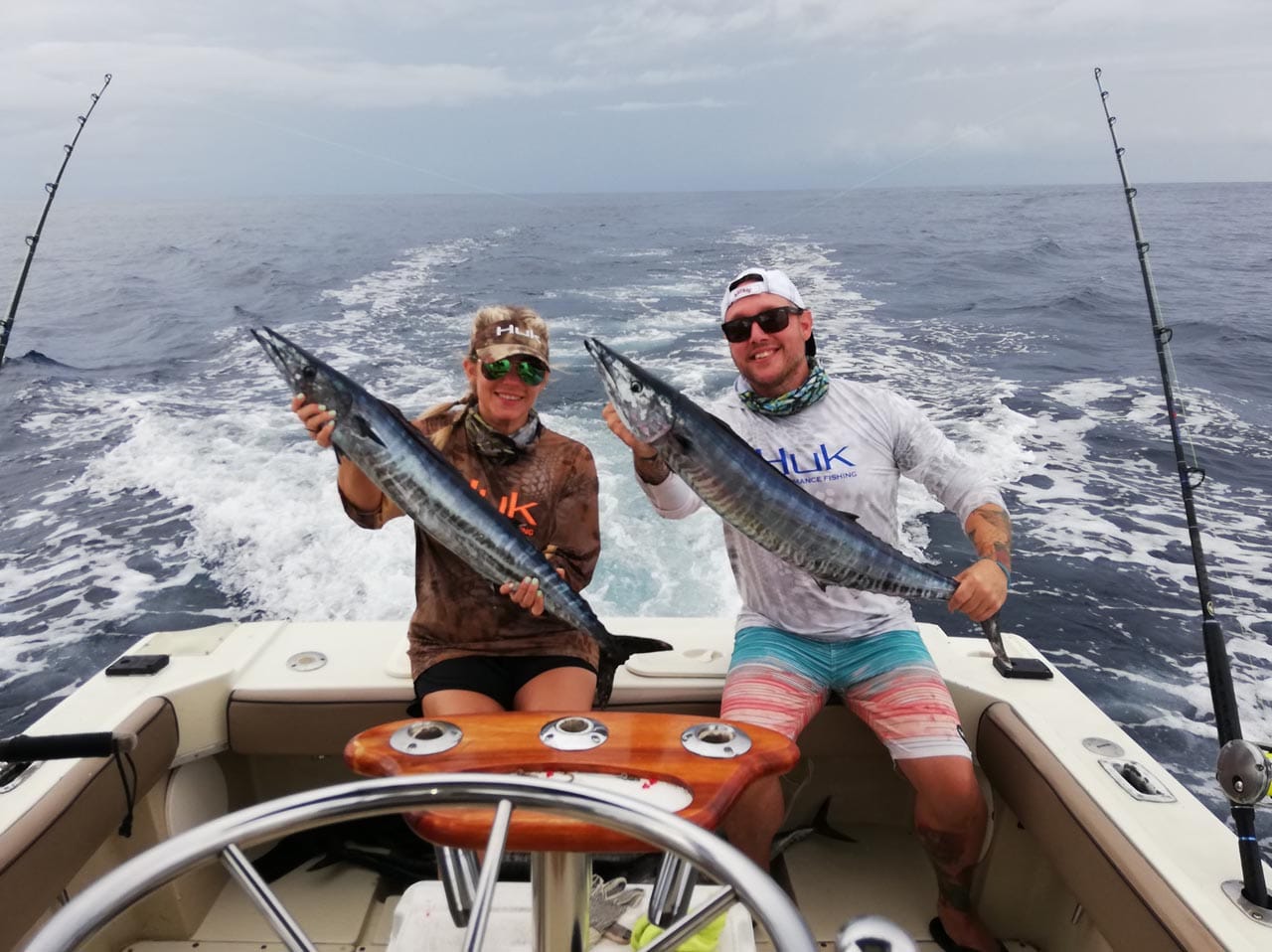
Wahoo are long, slender members of the mackerel family with an iridescent blue back, silver sides and bold tiger-like vertical bars. Their pointed snout hides a mouth full of razor-sharp teeth that slice through bait — and unprotected leaders.
They’re among the fastest fish in the sea, capable of bursts that make reels scream. In Costa Rica most wahoo caught on charters weigh 20 to 60 lb, and fish over 80 lb are possible.
Wahoo are usually solitary or in small groups, so they’re often a bonus fish on an offshore day. That’s what makes landing one so special.
Wahoo can show up any time offshore, but some periods are more productive.
| Region / Season | Best months | What to expect |
|---|---|---|
| North Pacific (Flamingo, Tamarindo, Papagayo) | September – November | The seasonal transition often brings more wahoo around offshore structure. |
| Central Pacific (Los Sueños, Jacó, Quepos) | Green season, with fish year-round | Usually a bonus fish while trolling for billfish, tuna and mahi-mahi. |
| South Pacific (Golfito) | Year-round on FAD trips | Offshore FADs and seamounts hold wahoo alongside tuna and dorado. |
| Offshore FADs & debris | Year-round | Floating structure attracts bait — and the wahoo that hunt it. |
Wahoo are found offshore along the whole Pacific coast — these ports give you the best shot.
North PacificFast access to deep water and seasonal wahoo runs, especially September to November.
 Central PacificSouth Pacific
Remote offshore water, FADs and seamounts make Golfito a strong choice for wahoo.
 Central Pacific
Well-equipped sportfishers with the speed and gear for high-speed wahoo trolling.
Central PacificPlenty of offshore boats close to Jacó hotels, where wahoo are a welcome bonus.
 North Pacific
Full-day offshore trips from Tamarindo during the fall wahoo window.
Tell us your dates and hotel — we’ll recommend the best port and boat for wahoo.
Wahoo fishing is all about speed, depth and the right leader.
Crews troll heavy, bullet-shaped lures at well above normal trolling speed to trigger reaction strikes from fast-swimming wahoo.
Planers and weighted rigs get rigged ballyhoo and lures down where wahoo cruise below the surface.
A wahoo’s teeth cut monofilament instantly, so crews use short wire leaders to keep the fish on.
Wahoo are caught on 30 to 50-lb class tackle with wire leaders, strong enough to handle the speed of the first run. The crew rigs everything — you just hold on.
Wahoo are one of the best-eating fish in the ocean, with firm, mild white meat that’s perfect grilled or as ceviche. You can keep a wahoo for dinner, and your crew will clean it at the dock. We encourage keeping only what your group will eat.
Wahoo can be caught year-round offshore, but September to November is often the most productive period, especially on the North Pacific around Flamingo, Tamarindo and Papagayo.
Flamingo and Guanacaste are strong in the fall, Quepos and Golfito produce wahoo around offshore FADs, and Los Sueños and Jacó boats regularly catch them as a bonus while trolling.
Wahoo are among the fastest fish in the ocean, capable of short bursts that rival billfish and tuna. Their first run after the strike is famously hard to stop.
Most wahoo on charters weigh 20 to 60 lb, and fish over 80 lb are possible.
Yes. Wahoo can be kept for eating and are excellent table fare. Your crew will clean it at the dock, and we encourage keeping only what your group will eat.
A full day is recommended. Wahoo live offshore and are often a bonus fish, so more time on the water means better chances.
Send us your dates, group size and where you’re staying — we’ll match you with the best offshore boat.